
Statue of Hindubhushan
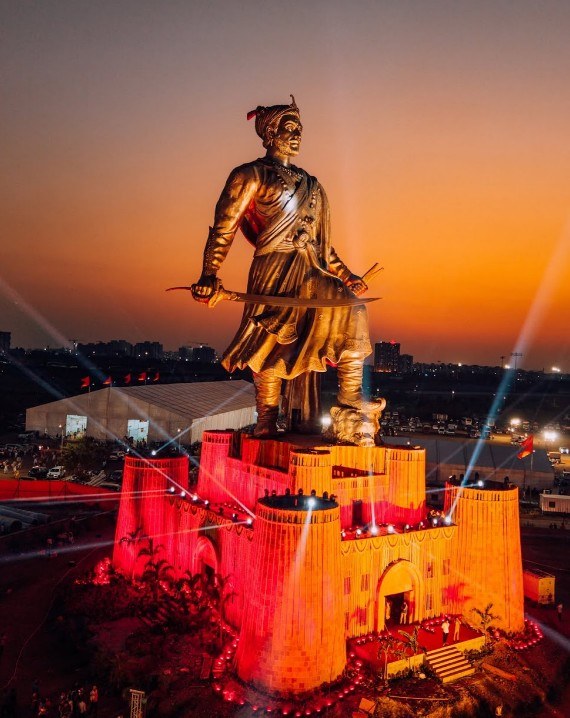
Statue of Hindubhushan – Rising majestically against the skyline of Borhadewadi in Moshi, Pimpri-Chinchwad, the Statue of Hindubhushan is a monumental tribute to Dharmaveer Chhatrapati Sambhaji Maharaj, the fearless second ruler of the Maratha Empire.
Recognised as the world’s tallest full-length statue of Chhatrapati Sambhaji Maharaj, this landmark stands as the centerpiece of the Shambhu Srishti memorial complex, celebrating his unmatched valor, intellect, and ultimate sacrifice for Swarajya.
Located in Borhade Wadi, Moshi, Hindubhushan Shri Chhatrapati Sambhaji Maharaj SmarakClick to open side panel for more information has rapidly become a prominent cultural and historical destination in the Pune–Pimpri-Chinchwad metropolitan region.
Statue of Hindubhushan – Architectural & Artistic Grandeur
Conceptualized and executed under the Pimpri-Chinchwad Municipal Corporation (PCMC), the monument is a masterclass in modern sculpting and structural engineering:
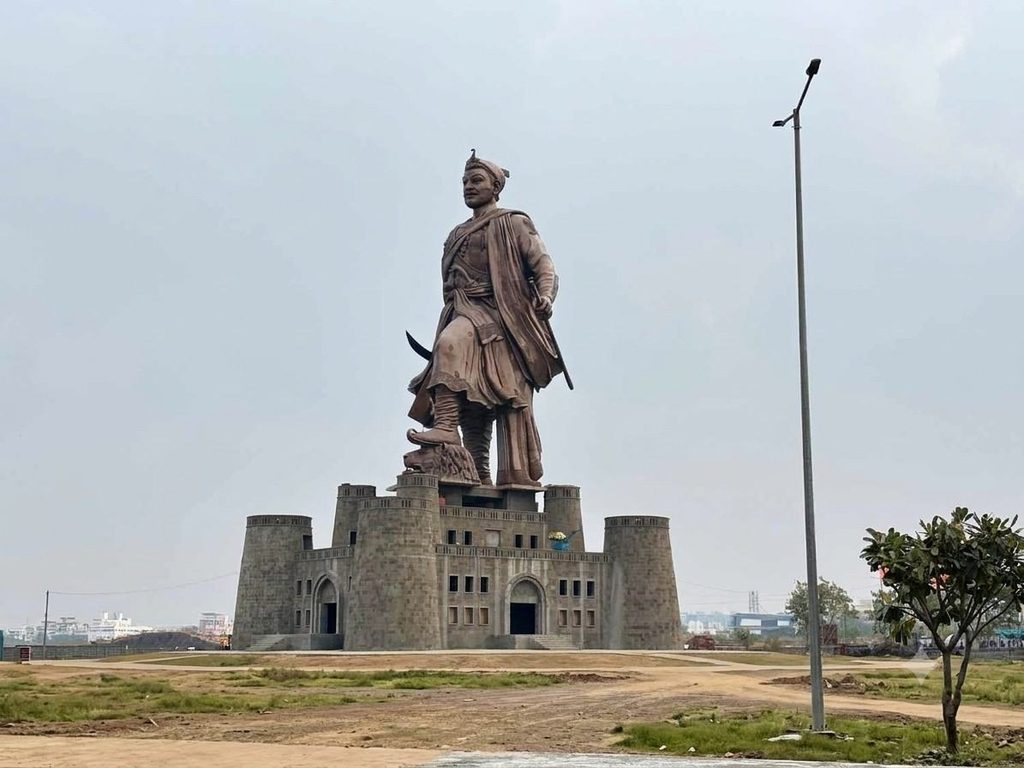
- Imposing Scale: The monument reaches a total height of 180 feet (or roughly 140 feet depending on base measurements), comprising a massive 140-foot bronze statue mounted atop a 40-foot reinforced pedestal.
- Renowned Craftsmanship: The statue was designed under the guidance of Padma Bhushan awardee and legendary sculptor Ram V. Sutar (renowned for designing the Statue of Unity), alongside noted historian and author Dr. Vishwas Patil. Structural stability was engineered in consultation with experts from IIT Bombay to ensure resilience against wind loads and seismic activity.
- Dynamic Pose: Crafted in durable bronze, the statue depicts Chhatrapati Sambhaji Maharaj in a commanding, heroic stance—riding forward with a drawn sword, symbolizing his undefeated military career and unwavering resolve.
- Storytelling in Bronze: The 40-foot plinth is not merely structural; it is adorned with intricate bronze murals and relief artwork chronicling pivotal milestones from Sambhaji Maharaj’s extraordinary life, from his scholarly achievements to his battlefield victories.
Inside the “Shambhu Srishti” Complex -Statue of Hindubhushan
The statue anchors Shambhu Srishti, a sprawling cultural and educational complex envisioned to inspire future generations:
- Tributes to Maratha Warriors: The memorial grounds also incorporate tributes to key commanders of the Maratha Empire, including Senapati Hambirrao Mohite.
- Planned Museum & Audio-Visual Facilities: Ongoing phases of the complex include a dedicated museum housing rare historical artifacts and documents, audio-visual presentation halls, and holographic displays narrating the life and legacy of Chhatrapati Sambhaji Maharaj.
- Landscaped Grounds: Open plazas, landscaped gardens, and an open-air amphitheater are designed to host cultural programs, historical lectures, and commemorative events.
Historical & Cultural Significance of Statue of Hindubhushan
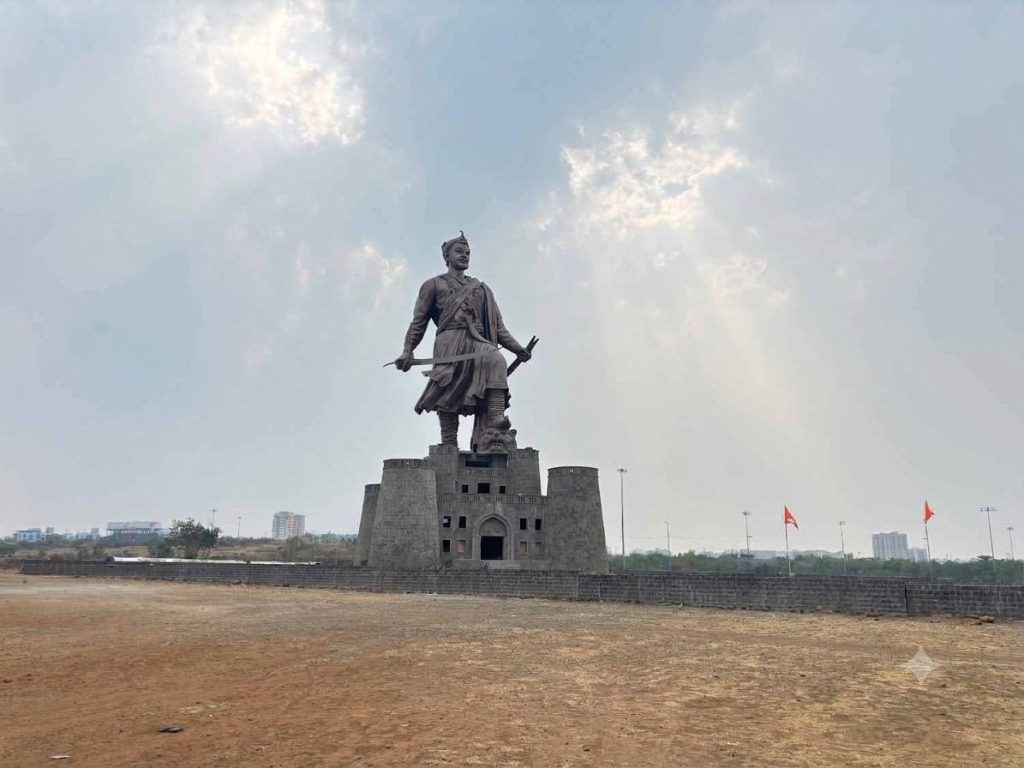
Chhatrapati Sambhaji Maharaj (1657–1689) is revered across India not only as a warrior who never lost a battle in his lifetime, but also as a polyglot scholar, poet, and visionary administrator. By enduring unimaginable torture without surrendering his faith or sovereignty, he became an eternal symbol of resilience and self-respect.
Since its grand public unveiling in September 2025—marked by traditional dhol-tasha performances and vibrant festivities—the Moshi memorial has drawn thousands of visitors, history enthusiasts, and devotees.
Visitors frequently note the deeply moving atmosphere at the site, especially at dusk when the setting sun frames the towering bronze silhouette before architectural floodlights illuminate the monument against the night sky.
Visitor Information & How to Reach -Statue of Hindubhushan
- Location: Borhadewadi, Moshi (near the International Exhibition and Convention Centre), Pimpri-Chinchwad, Maharashtra 411070.
- Best Time to Visit: Late afternoon through evening (5:00 PM to 8:30 PM) offers the best weather and lighting—allowing visitors to witness both sunset views and the illuminated night display. October to March provides the most pleasant climate.
- Connectivity:
- By Road: Easily accessible via the Pune–Nashik Highway (NH-60) and Spine Road by private car, cab, or PMPML buses.
- By Rail: Chinchwad, Pimpri, and Kasarwadi railway stations are located roughly 6 to 8 km away.
- By Air: Pune International Airport (Lohegaon) is approximately 20 km from the memorial.